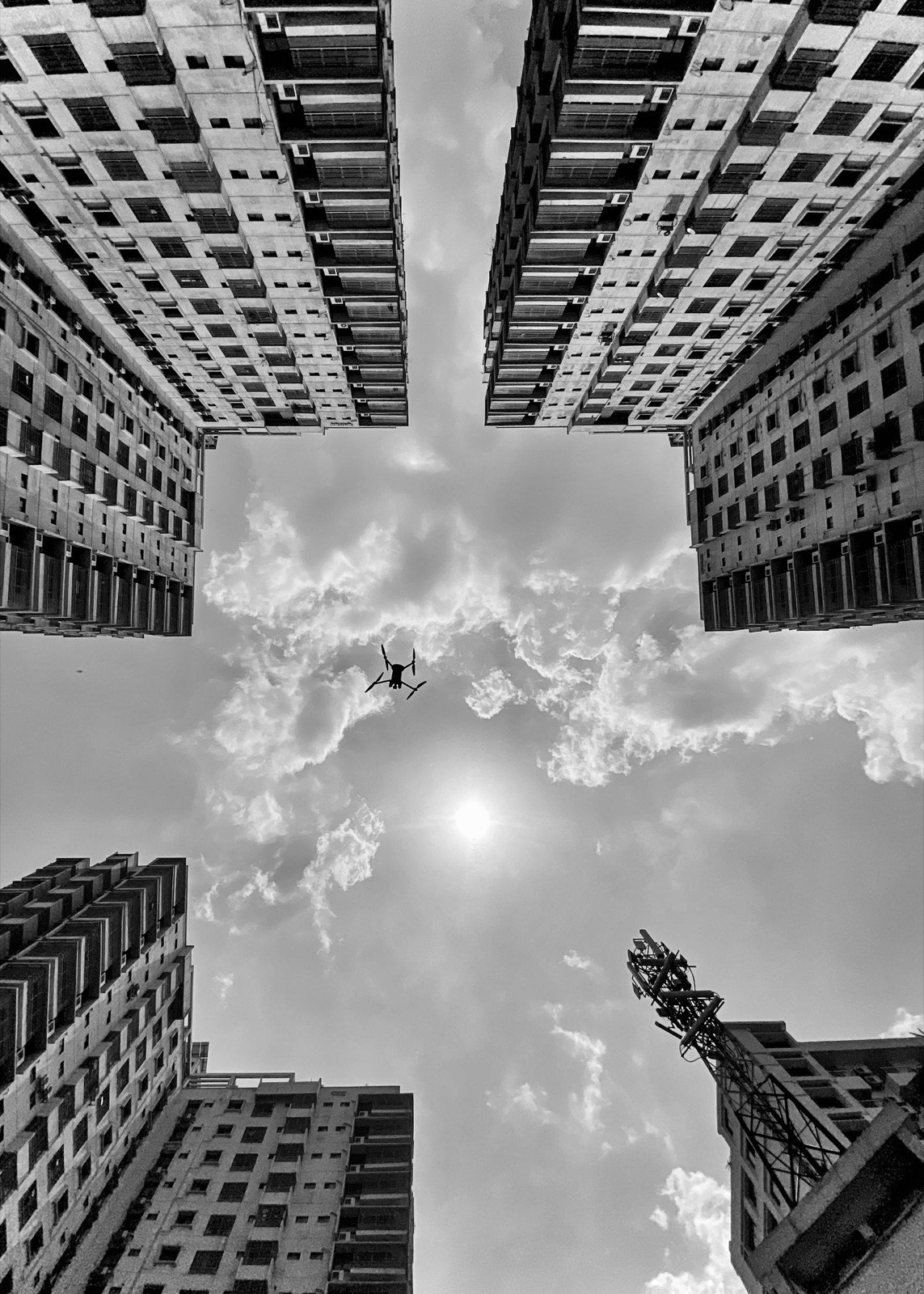
Commercial Drone Building Inspections
A commercial drone building inspection uses a remotely piloted aircraft fitted with a high-resolution camera to inspect roofs, facades and other high-level elements at close range, without scaffold, a MEWP or rope access. Flights are flown by qualified remote pilots working within Civil Aviation Authority (CAA) rules, and you receive clear, referenced imagery of the defects found so condition can be assessed from the ground.
Commercial drone inspection suits roofs, facades, elevations, gutters, parapets, chimneys and any high-level element where getting a person up there is difficult or dangerous. The output is clear visual evidence: images of cracked or slipped tiles, failed pointing, blocked gutters, corroded fixings, cladding defects and water ingress, referenced so a surveyor or engineer can assess condition without leaving the ground.
Our flights are carried out by qualified remote pilots operating within Civil Aviation Authority (CAA) rules. We work for building surveyors, facilities managers, structural engineers, property managers and contractors across London and the surrounding region, delivering inspection imagery that supports condition surveys, maintenance planning and defect diagnosis.
- Regulation
- CAA rules, flown by qualified remote pilots
- Method
- DJI Matrice 4E enterprise drone with a high-resolution camera
- Access needed
- No scaffold, MEWP or rope access
- Inspects
- Roofs, facades, gutters, parapets, chimneys and high-level fixings
- Imagery
- High-resolution visual; thermal where a thermal payload is used
- Deliverables
- Referenced imagery, annotated stills and a summary of observations
- Coverage
- London and the surrounding region
What we inspect
Drone inspection is well suited to:
- Pitched and flat roofs, including tiles, slates, membranes and flashings
- Facades and elevations, including brickwork, pointing, render and cladding
- Gutters, parapets, copings and rainwater goods
- Chimneys, towers, spires and other tall or awkward features
- High-level fixings, brackets and support elements
- Large roof areas across industrial and commercial estates
Depending on the aircraft and payload, we can capture high-resolution visual imagery and, where a thermal payload is used, thermal imagery that can help indicate heat loss, damp or missing insulation. We agree the type of imagery you need before the flight so the survey answers the question you are asking.
When you need it
Drone inspection is typically used:
- For a roof or facade condition survey where access is difficult or unsafe
- To investigate a specific defect, such as a leak, slipped tiles or cracked render
- Ahead of maintenance or repair, to scope works and target access precisely
- For planned preventative maintenance across a portfolio of buildings
- After storm or impact damage, to assess the extent quickly and safely
- Where scaffold or access equipment would be disproportionately costly for the inspection
Deliverables
You receive high-resolution imagery of the areas inspected, organised so each image can be related to its location on the building. Where useful we provide annotated stills highlighting the defects found, and a short summary of observations to accompany the imagery.
For larger surveys we can structure the output by elevation or roof area so the record is easy to navigate, and thermal imagery is supplied alongside the visual images where a thermal survey has been carried out. We confirm the format with you beforehand so the deliverable fits straight into your condition report or maintenance plan.
What affects the price
Every job is priced to its scope. The main things that move the cost are:
- The size of the building and the number of elevations or roof areas to inspect
- Site location, surrounding airspace and any CAA permissions required
- Whether visual imagery only or thermal imagery is needed
- The level of annotation and reporting to accompany the images
- Access, safety planning and the number of buildings across a portfolio
Send us the brief or call and we will confirm a fixed price for the work, free and with no obligation.
A survey you can plan around.
A clear, repeatable method on every job, so you know what is happening on site and what lands on your desk afterwards.
Scope and plan
We confirm what you need inspected, review the site and surroundings, and plan the flight in line with CAA rules and site safety requirements.
Site assessment
On the day we assess conditions, airspace, weather and any people or property nearby, and set up a safe operating area.
Flight and capture
A qualified remote pilot flies the inspection, capturing the imagery required of each target area.
Review and deliver
We review the imagery, annotate the defects found where required, and deliver the images and summary in the agreed format.
Questions we are asked about this service.
What is a commercial drone building inspection?
It is a building inspection carried out using a remotely piloted aircraft fitted with a camera, capturing close-range imagery of roofs, facades and other high-level elements. It allows condition to be assessed and defects to be identified without scaffold, access equipment or rope access, and it is faster and safer for hard-to-reach areas.
Do you need a licence to fly a drone commercially in the UK?
Commercial and professional drone flights in the UK are regulated by the Civil Aviation Authority, and remote pilots must hold the appropriate competency and register as operators under the relevant category. Our inspections are flown by qualified remote pilots operating within CAA rules, with flights planned to meet the requirements that apply to each site.
What defects can a drone survey identify?
A drone survey can reveal slipped, cracked or missing tiles and slates, failed or eroded pointing, cracked render, blocked or damaged gutters, corroded fixings and flashings, cladding and coping defects and signs of water ingress. Where a thermal payload is used, thermal imagery can help indicate heat loss, damp and missing insulation.
Is a drone inspection cheaper than scaffolding?
For inspecting a roof or high facade, a drone usually avoids the cost, time and disruption of erecting scaffold or hiring access equipment purely to look at the building. It lets you inspect first and then target any access precisely at the areas that actually need work, rather than accessing the whole elevation to find the problem.
Can you fly in a built-up area or near other buildings?
Flying near buildings, people and property is subject to CAA rules, and each site is assessed and planned accordingly. Some locations and conditions place limits on what can be flown, so we review the site and surroundings as part of planning and confirm what is achievable before attending.
How is the weather a factor?
Drone flights depend on suitable conditions, and strong wind, heavy rain or poor visibility can prevent safe flying. We monitor the forecast and assess conditions on the day, and where the weather does not allow a safe flight we reschedule rather than compromise the quality or safety of the survey.
One team, from point cloud to pull test.
Drone inspections in London
Roof and facade inspection of London buildings without scaffold, flown by qualified pilots within CAA rules.
See the service GPRConcrete scanning
See the rebar, conduit and post-tension cables hidden in the slab, before the drill goes anywhere near them.
See the service BS 8539Anchor pull testing
Prove the fixing holds before you trust it, pull-tested on site for anchors and ties to BS 8539.
See the serviceSend us the brief. We will scope it.
Not sure whether you need a survey, a test or both? Ask. Tell us the site, the deadline and what you need to know, and we will confirm the right survey or test, the standard it meets and exactly what you will receive.
- 1Send the brief or call.
- 2Scope, method and price confirmed fast, free and with no obligation.
- 3Booked at short notice, surveyed, reported in days.